Repiping Through the Attic in Laguna Niguel Slab Homes: Routing, Insulation and Fewer Wall Openings

Most Laguna Niguel homes sit on slabs, so original lines are buried in concrete. How an overhead attic route works, how we protect the lines, and what it means for…
Laguna Niguel was largely built in the 1970s and 1980s, and most of its single-story and two-story homes rest on concrete slab foundations. In many of those houses the original copper supply lines run under the slab. That is why slab leaks are so familiar here. When it is time to repipe, we almost never put new pipe back under the concrete. Instead we route it overhead, through the attic, and drop it down to each fixture.
Why go overhead
- No more lines in the slab. A future leak is in an accessible place, not under your floor
- No jackhammering of tile, wood floors or foundation
- Shorter, straighter runs in many floor plans
- Easier inspection and repair for decades to come
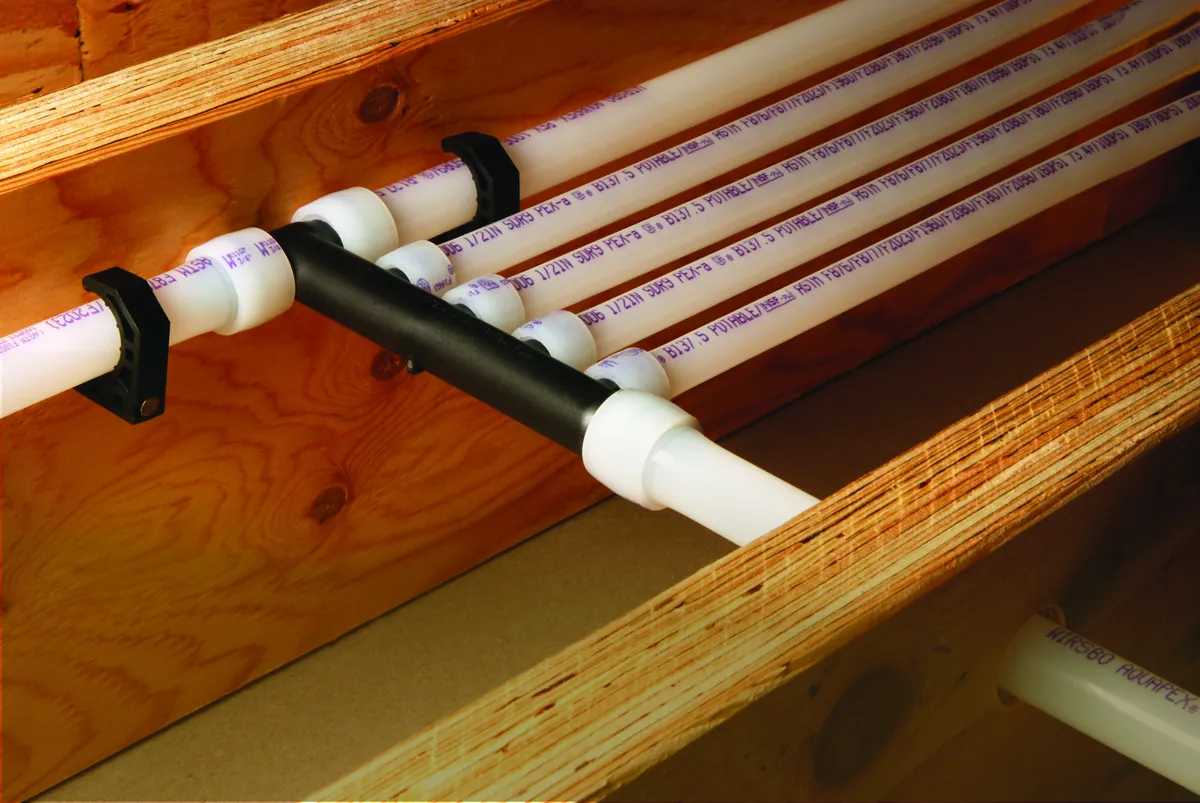
How an attic route works
- The new main line comes up from where water enters the house, usually at the garage or front wall
- It rises into the attic and becomes a trunk line, or feeds a multiport tee that splits to each area
- Branch lines drop down inside walls to kitchens, baths, laundry and the water heater
- Each drop ends at a new angle stop or valve body
We map every drop before we start so the number of wall openings stays small. Many openings land inside closets, on the garage side of a wall, or behind cabinets.
Protecting lines in a hot attic
South Orange County attics get hot in summer. PEX-A handles those temperatures, but good practice still matters:
- Lines are kept away from the hottest zone near the roof deck where possible
- Runs are supported and strapped so they do not sag
- Hot and cold lines are insulated, which helps hot water arrive faster and keeps cold water cooler
- Lines are buried under or protected within existing attic insulation where appropriate
Two-story homes
In two-story Laguna Niguel homes, the first floor is fed through interior walls and the floor cavity between levels, while the second floor can come from the attic. We plan these routes floor by floor.
Tile roofs and access
Many neighborhoods, from Beacon Hill to the Niguel Summit area, have tile roofs and low-pitched attics. Our crews work from the attic hatch and use walking boards so we do not damage ceilings. If access is tight, we tell you up front.
Permits and inspection
The City of Laguna Niguel requires a permit for a repipe. The inspector checks the new lines, supports and pressure test before walls are closed. We coordinate the visit and handle the paperwork.
What it means for your walls
Overhead routing usually means fewer and smaller openings than people expect. We patch them after inspection so they are ready for paint.
Related reading
See slab leak repair options in Laguna Niguel and PEX repiping explained. Neighbors can visit our Aliso Viejo, Laguna Hills and Dana Point sites, and every city we serve is listed at repipeinc.com.
Done with slab leaks?
We will walk your attic, map the route and show you exactly where openings will go. Get my free quote. Our AI system alerts a technician instantly, so you get a fast callback.
Repipe OC, 23821 Hillhurst Drive, Laguna Niguel, CA 92677, (949) 524-2362, CSLB #1087885 C-36.
Repipe OC near you
Not in Laguna Niguel? The same crew serves nearby cities. See every city we serve, or jump to a neighboring city:
 Written by Repipe OC · CSLB #1087885 C-36 · 23821 Hillhurst Drive, Laguna Niguel, CA 92677 · (949) 524-2362